53% of Users Abandon Slow Platforms—Yet Only 61% of Businesses Use the Technology That Solves This Problem
Your website loads slowly for international customers. Toronto visitors experience delays during peak hours. Your e-commerce checkout stutters during traffic spikes. Google penalizes your search rankings for poor performance. Meanwhile, competitors serve identical content at lightning speed from the exact same hosting infrastructure.
The difference? Content Delivery Networks (CDNs)—the $36.91 billion industry (growing to $170.86 billion by 2034) that 67% of successful digital businesses consider essential infrastructure, yet many Toronto businesses have never implemented.
CDNs aren’t optional optimization anymore—they’re the difference between websites that convert and websites that hemorrhage customers during the split-second when users decide whether to wait or click away. In an era where 47% of users expect 2-second page load times and 53% abandon platforms experiencing slow content delivery, CDN implementation directly determines revenue capture or revenue loss.
Video content now represents 58-65% of internet traffic, with streaming platforms, e-commerce product demonstrations, and interactive media demanding instant delivery regardless of user location. 80% of global internet traffic is streaming—and every millisecond of delay translates to measurable conversion rate decreases and customer abandonment.
Here’s the brutal reality: your hosting server sits in one physical location. Customers accessing from Toronto experience acceptable performance. Customers 3,000 km away wait seconds longer—and most don’t wait. They bounce to faster competitors who use CDNs to serve content from servers physically closest to every user globally.
For Toronto businesses implementing professional web development and performance optimization, CDN deployment represents the single highest-ROI infrastructure upgrade available—typically delivering 200%+ speed improvements for fraction of traditional performance optimization costs.
What CDNs Actually Do (And Why Every Website Needs This)
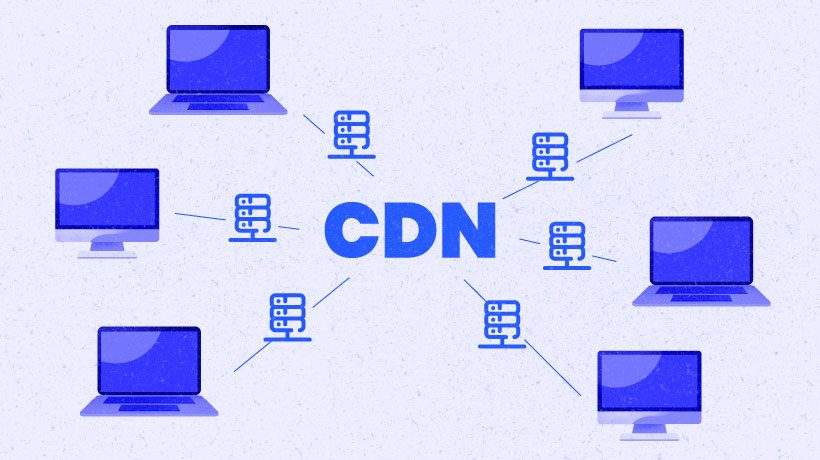
A Content Delivery Network is a geographically distributed network of servers that caches and delivers your website content from locations physically closest to each visitor. Instead of every user requesting files from your single origin server, CDNs serve cached content from the nearest edge server in their global network.
The Technical Reality
Traditional hosting: User in Vancouver requests your Toronto-hosted website → request travels 3,400 km to Toronto server → server processes request → response travels 3,400 km back to Vancouver → total round-trip time determines page load speed.
CDN-enabled hosting: User in Vancouver requests your Toronto-hosted website → CDN edge server in Vancouver serves cached content locally → near-instant delivery with minimal latency.
The speed difference is dramatic: CDN-enabled sites load 60% faster on desktop and 19% faster on mobile compared to non-CDN sites. For international traffic, speed improvements routinely exceed 200%.
What Gets Delivered Through CDNs
Static Content (the majority of most websites):
- Images, videos, CSS files, JavaScript files
- Downloadable documents, PDFs
- Product photos, banner images
- Font files, icons
Dynamic Content (increasingly supported):
- API responses
- Personalized content
- Real-time data updates
- Database-driven pages
Video Streaming (the killer application):
- 58-65% of CDN traffic is video content
- 4K streaming requires 25 Mbps—impossible to deliver globally without CDNs
- Live streaming, video-on-demand, interactive video
- Netflix invested $12.5 billion in content but depends entirely on CDN infrastructure for delivery
When developing modern websites and digital platforms, CDN integration determines whether your investment delivers global performance or gets bottlenecked by single-server limitations.
The Business Impact: Why CDN ROI Is Immediately Measurable
The CDN market grows from $30.51 billion in 2025 to $164.90 billion by 2033 (19.7% CAGR) because businesses recognize CDNs deliver immediate, measurable performance improvements that translate directly to revenue increases.
Performance Improvements That Drive Revenue
Load Time Reduction: Typical CDN implementations reduce page load times by 40-60% for domestic traffic and 100-300% for international visitors. For e-commerce site generating $500,000 annually, 1-second load time improvement increases revenue by $35,000+ annually through improved conversion rates.
Bounce Rate Decrease: 53% of online consumers abandon platforms experiencing slow content delivery. CDN-enabled speed improvements keep visitors engaged, reducing bounce rates by 25-40% and proportionally increasing conversion opportunities.
SEO Rankings Improvement: Google prioritizes fast-loading websites. CDN speed improvements directly boost search rankings, increasing organic traffic by 15-30% within months of implementation.
Geographic Reach Expansion: Toronto businesses serving international customers without CDNs deliver terrible user experience to overseas visitors. CDNs enable true global reach with consistent performance everywhere.
Traffic Surge Management
Your server can handle 100 simultaneous visitors before slowing. Successful marketing campaign drives 1,000 simultaneous visitors. Without CDN, your site crashes during your moment of maximum opportunity. With CDN, edge servers distribute load across global infrastructure—1,000 simultaneous visitors become 50-100 per edge server location.
E-commerce flash sales, product launches, viral marketing success—all create traffic surges that either generate revenue (with CDN infrastructure) or cause catastrophic crashes (without CDNs).
Security Benefits
25% increase in DDoS attacks in 2025, with largest incident reaching 5.6 terabits per second. CDNs provide built-in DDoS protection by distributing traffic across global network, absorbing attacks that would overwhelm single-server infrastructure.
41% of CDN deployment preference now includes security-enabled services—DDoS mitigation, Web Application Firewall (WAF), bot management, SSL/TLS encryption at edge.
When implementing website security and performance strategies, CDNs provide dual benefit of speed optimization and security enhancement simultaneously.
How CDNs Work: The Technology Explained Simply
Global Edge Server Network: Major CDN providers operate thousands of servers in hundreds of locations worldwide. Cloudflare runs 300+ data centers. AWS CloudFront operates 450+ edge locations. Akamai pioneered CDN technology with 1,000+ servers globally.
Content Caching Strategy: When user first requests your content, CDN edge server fetches it from your origin server, caches it locally, then serves it. Subsequent requests for same content get served instantly from cache—no origin server request needed.
Intelligent Routing: CDNs automatically route requests to optimal edge server based on:
- Geographic proximity to user
- Server current load and availability
- Network conditions and latency
- Content availability in cache
Automatic Content Updates: When you update website content, CDN networks automatically propagate changes across edge servers. Most CDNs purge outdated cache within minutes globally.
HTTP/3 Protocol Adoption: Leading CDN providers achieve 69% HTTP/3 adoption compared to less than 5% for origin servers. This 10-15x difference demonstrates how CDN infrastructure drives adoption of next-generation web standards delivering superior performance.
The CDN Market Leaders and What They Offer
The CDN market is dominated by established players and emerging innovators, each offering unique advantages for different business needs:
Traditional CDN Leaders
Akamai Technologies (Market Leader):
- Pioneered CDN technology
- Largest global edge footprint
- Strong media delivery and enterprise capabilities
- Premium pricing reflects extensive infrastructure
Cloudflare (Emerging Leader):
- 69% HTTP/3 adoption leading industry
- Integrated security and CDN platform
- Aggressive pricing disrupting market
- Strong developer services and API
- Popular among cloud-native businesses
Amazon CloudFront (AWS):
- 30% cloud infrastructure market share
- Seamless AWS integration
- Pay-as-you-go pricing
- Global edge network with 450+ locations
- Ideal for businesses already using AWS
Google Cloud CDN:
- 12-13% market share
- Integration with Google Cloud Platform
- Strong analytics and machine learning capabilities
- Competitive pricing
- Excellent for businesses using Google Workspace
Market Statistics
North America dominates with 38-43% global CDN market share, driven by high internet penetration, advanced infrastructure, and streaming platform concentration.
Media & entertainment represents 59-65% of CDN usage—streaming platforms, gaming, OTT services all depend on CDN infrastructure for content delivery.
46% of large enterprises deploy multi-CDN strategies, using multiple CDN providers simultaneously for redundancy, geographic optimization, and performance maximization.
When selecting technology infrastructure and digital solutions, CDN provider choice depends on existing hosting environment, budget, geographic audience distribution, and technical requirements.
CDN Implementation: What Toronto Businesses Need to Know
61% of websites globally use CDNs—yet many Toronto businesses remain unaware of this technology or assume it’s only for large enterprises. Reality: CDN implementation is accessible, affordable, and delivers immediate measurable results for businesses of all sizes.
Cost Reality
CDN pricing typically ranges $20-200/month for small to medium businesses—fraction of performance benefit value. Many providers offer free tiers for testing and low-traffic sites.
Pay-for-usage models mean costs scale with traffic—you pay for value received rather than fixed infrastructure overhead.
Cost comparison: Upgrading hosting infrastructure to match CDN performance would cost thousands monthly. CDN delivers superior global performance for fraction of cost.
Implementation Complexity
Modern CDN implementation is remarkably simple:
- Sign up with CDN provider
- Add DNS records pointing to CDN
- Configure caching rules (often automatic)
- Test and verify performance improvements
Most implementations complete within hours, not days or weeks. For WordPress sites, CDN integration plugins make setup even simpler—often just activating plugin and entering CDN credentials.
Technical Requirements
CDNs work with any hosting environment: shared hosting, VPS, cloud hosting, dedicated servers. CDN sits “in front” of your existing infrastructure, serving cached content while origin server handles dynamic requests.
SSL/TLS certificate compatibility: Modern CDNs automatically handle HTTPS, often providing free SSL certificates as part of service.
WordPress, Shopify, custom applications—CDNs support all platforms and content management systems.
Performance Monitoring
CDN analytics dashboards provide detailed performance metrics:
- Cache hit ratios
- Bandwidth savings
- Geographic traffic distribution
- Load time improvements
- Traffic spike management
Real-time monitoring shows exactly how CDN improves user experience across all geographic locations and device types.
CDN Use Cases: Who Benefits Most
Every website benefits from CDN implementation, but certain business types see particularly dramatic improvements:
E-Commerce Platforms
Product images, videos, checkout processes—all accelerate with CDN caching. International e-commerce sites serving global customers achieve consistent fast performance everywhere, eliminating geographic disadvantage.
Traffic surge management during sales events—Black Friday, flash sales, product launches all generate traffic spikes. CDNs prevent crashes during highest-revenue moments.
Media and Entertainment
Video streaming platforms depend entirely on CDN infrastructure. 58-65% of CDN traffic is video content—4K streaming, live broadcasts, on-demand content all require CDN delivery for acceptable quality.
Gaming platforms, interactive content, large file downloads—all benefit from CDN bandwidth and geographic distribution.
SaaS and Web Applications
API delivery, dynamic content, real-time updates—modern CDNs optimize dynamic content delivery alongside traditional static caching.
Global user base with consistent performance expectations—CDNs eliminate geographic latency penalties.
Corporate Websites and Marketing Platforms
Campaign landing pages experiencing traffic surges—successful marketing drives unpredictable traffic spikes. CDNs ensure campaigns succeed rather than crash under demand.
International audience reach—corporate sites with global visitors deliver fast experience everywhere, not just near origin server.
When building comprehensive digital presence and marketing infrastructure, CDN implementation ensures marketing investments succeed rather than get sabotaged by performance limitations.
CDN vs Traditional Performance Optimization
Traditional optimization focuses on origin server improvements: database optimization, code efficiency, caching plugins, image compression. These improvements help—but they’re limited by single-server infrastructure and geographic distance penalties.
CDN optimization bypasses these limitations entirely by serving content from globally distributed edge servers. Geographic distance becomes irrelevant when content serves from user’s local region.
The most effective strategy combines both: optimize origin server for efficiency, then implement CDN for global performance multiplication. Optimized content served through CDN delivers maximum possible performance.
Cost-benefit analysis strongly favors CDNs: spending $200/month on CDN delivers greater performance improvement than $2,000/month on server upgrades limited by geography and single-server architecture.
Common CDN Misconceptions Toronto Businesses Believe
“CDNs Are Only for Large Websites”
False. CDNs benefit websites of all sizes. Small business serving local Toronto market plus occasional international visitors gains significant performance improvements and bandwidth cost reductions for $20-50/month.
“My Hosting Already Includes CDN”
Partially true. Some hosting providers include basic CDN integration—but proprietary CDN networks often underperform compared to dedicated CDN providers with global infrastructure.
“CDNs Are Complicated to Implement”
False. Modern CDN implementation takes hours, not weeks. For WordPress sites, plugin-based integration makes setup even simpler.
“CDNs Break Dynamic Content”
False. While CDNs traditionally focused on static content, modern CDNs intelligently handle dynamic content, API responses, and personalized experiences.
“The Cost Isn’t Worth It”
Demonstrably false. CDN costs typically $20-200/month. Revenue improvements from faster load times, reduced bounce rates, and improved SEO typically exceed costs by 10-50x within months.
Your Toronto Business CDN Implementation Roadmap
Immediate Assessment (This Week)
- Test current performance globally: Use tools like GTmetrix, Pingdom, WebPageTest from multiple geographic locations
- Analyze traffic sources: Review Google Analytics for international visitor percentages
- Calculate potential revenue impact: Estimate conversion rate improvements from faster load times
- Research CDN providers: Compare pricing, features, integration complexity
- Estimate implementation timeline: Most complete within one day
Implementation Phase (Next 30 Days)
- Select CDN provider: Choose based on budget, hosting environment, geographic needs
- Configure CDN integration: Set up DNS, caching rules, SSL certificates
- Test thoroughly: Verify performance improvements across geographic locations
- Monitor analytics: Track cache hit rates, bandwidth savings, load time improvements
- Optimize caching rules: Fine-tune configuration based on real traffic patterns
Ongoing Optimization
- Review performance metrics monthly: Monitor CDN analytics dashboards
- Adjust caching strategies: Optimize based on content updates and traffic patterns
- Evaluate cost-benefit: Calculate actual ROI from speed improvements
- Consider multi-CDN strategy: For enterprise needs, evaluate multiple CDN providers
- Stay current with technology: CDN capabilities evolve rapidly—leverage new features
When implementing comprehensive website performance strategy, CDN deployment delivers fastest time-to-value of any infrastructure upgrade available.
The $170 Billion Industry Solving Speed Problems
The global CDN market grows from $30.51 billion in 2025 to $170.86 billion by 2034 because businesses recognize CDNs deliver immediate, measurable performance improvements impossible to achieve through traditional optimization alone.
61% of websites globally use CDNs—yet many Toronto businesses haven’t implemented this technology. 53% of users abandon slow platforms. 47% expect 2-second load times. 58-65% of internet traffic is video requiring CDN delivery for acceptable quality.
These aren’t technical metrics—they’re revenue determinants. Every second of load time delay, every international visitor experiencing slow performance, every traffic surge causing crashes—all represent direct revenue loss preventable through CDN implementation.
The difference between websites that convert and websites that lose customers to faster competitors often isn’t content, design, or marketing—it’s infrastructure enabling fast global performance regardless of user location or traffic volume.
Your competitors serving identical markets read these same statistics. 67% of successful digital businesses consider CDNs essential infrastructure. The ones implementing CDNs capture market share from slower competitors through superior user experience and consistent performance.
The question isn’t whether CDNs improve website performance—the data proves they do dramatically. The question is whether you’ll implement CDN infrastructure before competitors capture your customers with faster loading speeds.
Ready to transform website performance from mediocre to lightning fast? Partner with experts who understand CDN implementation, performance optimization, and infrastructure strategy that delivers measurable ROI through superior user experience.
About Byte Inspired: Based in Toronto, Byte Inspired implements CDN solutions that transform website performance from slow to lightning fast. We understand CDNs in 2026 deliver not just speed improvements but competitive advantages through superior user experience, global reach, and traffic surge management. Our comprehensive approach combines CDN strategy, performance optimization, and infrastructure planning to ensure Toronto businesses capture maximum value from their digital infrastructure investments. Discover how strategic CDN implementation transforms website performance into revenue advantage.
To visit our social media, please click on Facebook and Instagram